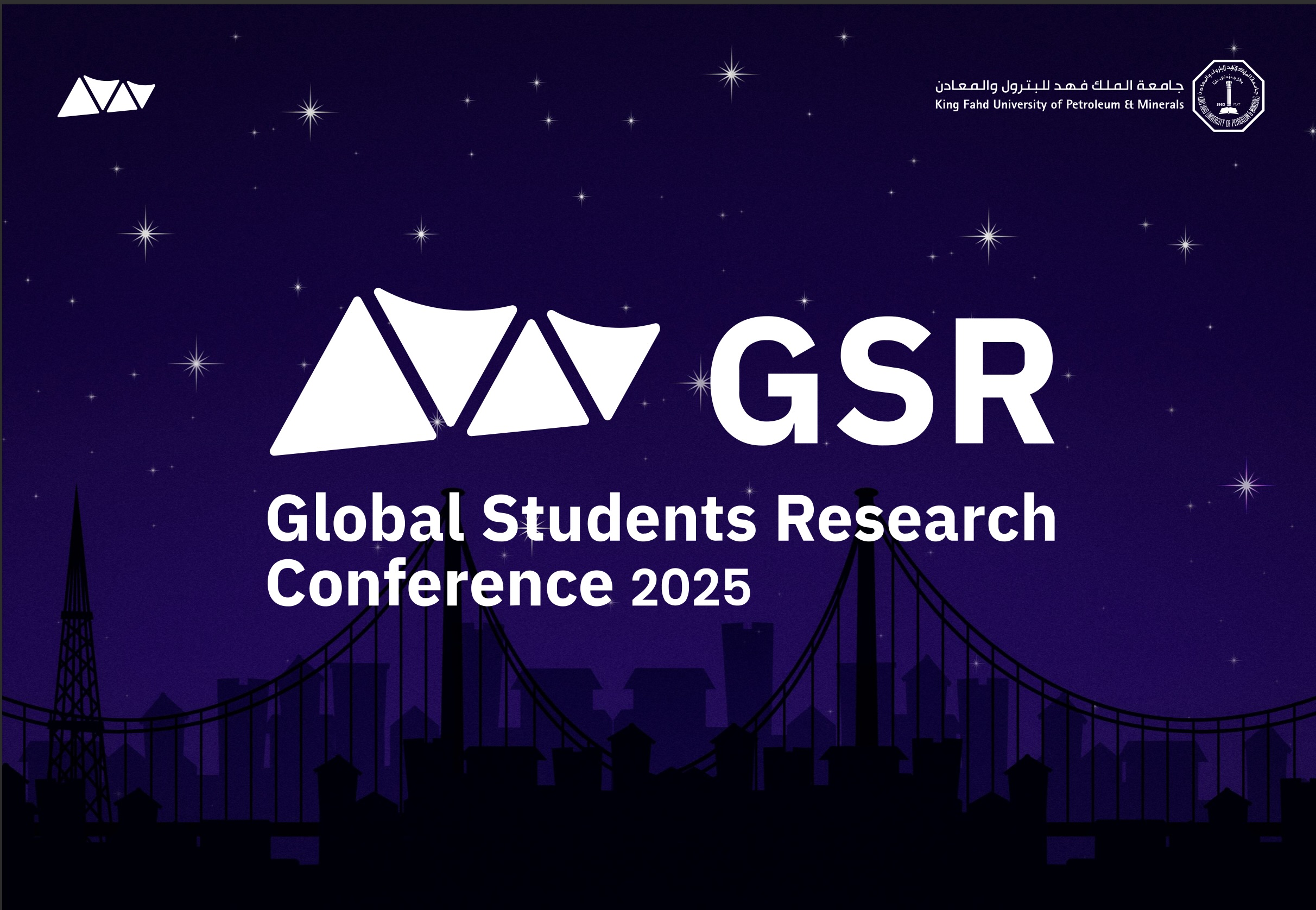
The official printed booklet for KFUPM's first Global Student Research Conference — written, curated, and designed entirely by me.
The GSR Booklet is the official publication of the first Global Student Research Conference at KFUPM — a landmark event bringing together student researchers from institutions across the world. The booklet serves as both a conference program and a lasting artifact documenting the research, participants, and spirit of the event.
Every aspect of the booklet — the writing, layout, typography, iconography, and print specifications — was handled by me. It was printed and distributed to all conference attendees and faculty.
The booklet needed to serve multiple purposes simultaneously: guide attendees through the conference schedule, showcase the student research papers, introduce the organizing team, and feel prestigious enough to represent a global academic event. The design had to balance accessibility (clear navigation, readable body text) with prestige (premium visual treatment, consistent brand application).
Each research paper has a dedicated spread: abstract, author biography, institution affiliation, and a consistent visual treatment that makes the section scannable while giving each researcher's work a moment in the spotlight.
A detailed day-by-day schedule with session tracks, speaker names, room assignments, and time slots — designed to be usable at a glance in a busy conference environment.
A full section recognizing the organizing committee members — the 60+ students who built the conference from scratch — with photos, names, and roles, giving the human effort behind the event its deserved visibility.
Managing 50+ pages of content in a single Figma file while maintaining visual consistency was a real organizational challenge. Building a robust component library early — reusable section headers, abstract cards, schedule rows — was what made it manageable. Pages built without components became expensive to update when design decisions changed.
Coordinating content from dozens of researchers also meant constant updates right up to the print deadline. The design had to accommodate last-minute changes to abstracts, bios, and schedule items without breaking the layout.
Long-form publication design is a different discipline from product UI design. The constraints of print — bleed areas, CMYK color considerations, font embedding, resolution requirements — add a layer of complexity that digital design doesn't have. Discovering these constraints mid-project was stressful; understanding them upfront would have saved several redesign cycles.
This project also deepened my appreciation for editorial rhythm — how pacing works in a physical document, when to give a spread room to breathe, and when density serves the reader. These are skills that transfer back into digital design in ways that aren't obvious until you've worked at the other scale.